Showing posts with label The Seventh Seal. Show all posts

04 August, 2009

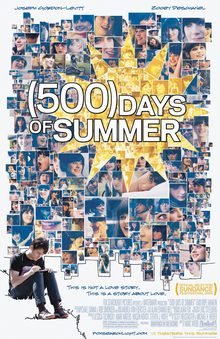
(500) Days of Summer (2009)


Like ever other sensible guy (and some sensible girls), I have a crush on Zoey Deschanel, so being able to see her in a movie that doesn't star Will Ferrel, Mark Wahlberg or Matthew McConaughey is exciting. Ok, I'll admit to enjoying Elf, and Will Ferrel did great in Winter Passing, but being in a Wahlberg movie is inexcusable.

As usual, Deschanel's usual, robotic, loveless facade is on display in its full glory. The film follows the relationship she has with former 3rd Rock From the Sun actor Joseph Gordon-Levitt, who has been in a few critically acclaimed indie flix I need to see, but loses points for being in the new GI Joe movie. Again, inexcusable.

The film's format is one of its best strengths. Rather than chronologically, the story bounces back between Gordon-Leavitt's character meeting Summer, the period of their relationship, and then his life following being dumped. What makes the film extra interesting is that it's told completely from his point of view. There is only one shot that I remember of Deschanel's character in the film when Gordon-Levitt isn't present, and that shot is the only thing in the entire film that bothered me.

Unlike most romantic comedies, this one is good. The humor is frequent and clever and the characters are engaging, likable and it's easy to relate to them (sometimes too easy, depending on your dating history). Rather than relying on the simple fact that it's not a typical film of the genre (the opening narration tells us that it is "not a love story"), the film really tells a wonderful story that ends happily in the least cheesy way possible (well, the final joke is incredibly cheesy, but provides a big laugh before the final credits). Of all the movies I've seen this year, this is the only one I will probably see again before it's out of theaters.

As an aside, my favorite scene in the film takes place when a heartbroken Levitt heads to theater. We see clips from 3 different films, and, much to my excitement, 2 of them are blatant Bergman references. This was already the best romantic comedy I have seen in an awfully long time, but adding a Persona and Seventh Seal reference just made it that much better.

Also, unlike similarly hip romantic comedies (coughgardenstatecough), this movie doesn't exist primarily as a vehicle for its soundtrack. Sure, the Regina Spektor song at the beginning is pretty noticeable (and wonderful), and the first conversation the two main characters have is about The Shins, and Levitt seems to only own Joy Division and Clash shirts, but after about 15 minutes, the director stops trying to portray them as painfully cool people. So, good for you, Mr. Director.

03 August, 2009

Det sjunde inseglet (1957)

I chose the the address of this site (and my iPod, which replaced my old iPod, which I had given the much better name of Thelonious Crunk) in reference to Max von Sydow's character in Ingmar Bergman's 1957 art-house classic, Det sjunde inseglet (The Seventh Seal). The story is pretty well known, a knight returning from the crusades, demoralized and wavering in his faith in God and Jesus (who von Sydow would actually go on to portray less than a decade later in The Greatest Story Ever Told) meets death on a beach and challenges him to a game of chess to give him time to search for answers and perform one final good deed.

As Bergman's most well known film, The Seventh Seal seems to carry with it the weight of all the perceptions of the Swedish auteur's prodigious output (totaling over 60 films during his career). As such, the film is often thought of as dour and depressing. What could be more depressing than a film whose theme so involves death that it was even given a starring role? However, viewing this as an exercise in anxiety and depression will be entirely fruitless.

For one, von Sydow's knight only became an important character well after the original screenplay (a play he had written called Wood Painting) had been conceived. A great deal of the film is instead focused on Jof, the actor, and his family and von Sydow's squire played by Bergman regular, Gunnar Björnstrand. These characters are given extremely funny, witty lines to contrast the painfully Scandinavian sternness portrayed by von Sydow.

Also interesting to note is the films unusually optimistic ending. Whereas many of Bergman's films end in the most depressing ways imaginable (think of what happens to Alexander at the end of Fanny och Alexander, for example), Bergman gives us a glimmer of hope. Jof's family becomes a symbol of love, an element often missing in Bergman's work.

This was my introduction to Ingmar Bergman, and in all honesty, left me somewhat uninterested. I was profoundly interested in the scenes of the knight, having recently denounced my Catholic upbringing shortly before viewing the film. But it wasn't until I recently reassessed the film, after seeing some 20 or so Bergman films, that I understood why it's so revered. Unlike some of his masterpieces from the late 60s, particularly Skammen (1968), Vargtimmen (1968) and En Passion (1969), the Seventh Seal perfectly connects the brilliant humor of some of his earlier films with the dark, philosophical questions that he would eventually become known for. Overall, I've come to love this film, though I would consider it simply as one of Bergman's first masterpieces. I feel he made much better films, but given its historical importance and its own qualities, this is a must see for any fan of film.